King Francis I and hunting
Francis I and the Practice of Hunting in the Vivarais
Francis I is recognized by historiography as an itinerant sovereign and a passionate hunter, an activity that lay at the very heart of court life during the Renaissance. Hunting practices justified the existence of numerous lodges located outside the major royal residences. The wooded and game-rich territories of the southeast of the kingdom, including the Vivarais and the areas bordering the Rhône Valley, fully formed part of this functional context.
At the beginning of the 16th century, hunting lodges and pavilions constituted a structuring element of seigneurial and aristocratic territorial organization. They provided temporary accommodation for lords, officers, or members of the court during travels, hunting expeditions, or official journeys. The Rhône Valley, a strategic corridor between the north and south of the kingdom, was then dotted with residences, stopping places, and lodges intended for these purposes.

The Domaine de la Salamandre is identified as a former hunting lodge, established in Saint-Just-d’Ardèche, within a territory historically attached to the Vivarais and located along the Rhône Valley, a major axis of circulation since the Middle Ages and throughout the Renaissance. The architectural features and the layout of the buildings are consistent with a construction or remodeling dating from the 16th century, corresponding to the reign of Francis I (1515–1547). This dating is based on an analysis of the built fabric and the historical context of the site, notably the presence of a remarkable architectural element: the coat of arms of Francis I displayed above the entrance door of the main building.
This heraldic element, characteristic of the Renaissance, constitutes a strong symbolic marker expressing an affiliation, protection, or reference to royal authority of the period. The presence of these arms enhances the site’s heritage value and historical interest, without constituting documentary proof of a personal stay by the sovereign.
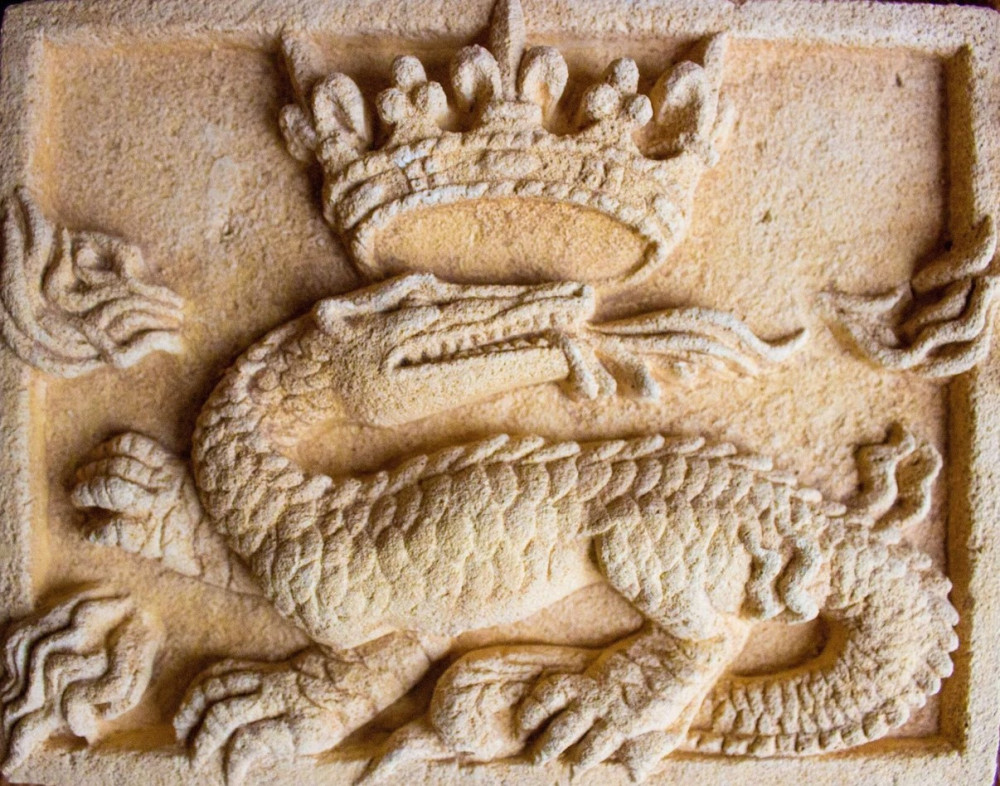
Nevertheless, the site fits coherently within the framework of 16th-century hunting practices, seigneurial and aristocratic travel, and Renaissance territorial organization. The reference to the reign of Francis I reflects a chronological and cultural context.
The building stands as a testament to historic architecture associated with aristocratic ways of life and hunting practices during the Renaissance. Its restoration and enhancement respect the site’s heritage character while adapting it to contemporary standards of comfort and high-end tourist accommodation.